

Waikiki Beach is an urban shoreline in Honolulu, Hawaiʻi, extending between Diamond Head and Ala Wai Boat Harbor. Its connected beach sections include Kūhiō Beach, where you’ll find public facilities and a swimming enclosure, though ocean conditions can change.
- The shoreline extends 2.4 miles.
- Kūhiō Beach has parking, showers, handicap access, food concessions, and lifeguard service.
- Waikīkī Beach is about 1.1 miles from a five-star resort in Waikīkī.
Understanding Waikīkī’s shoreline
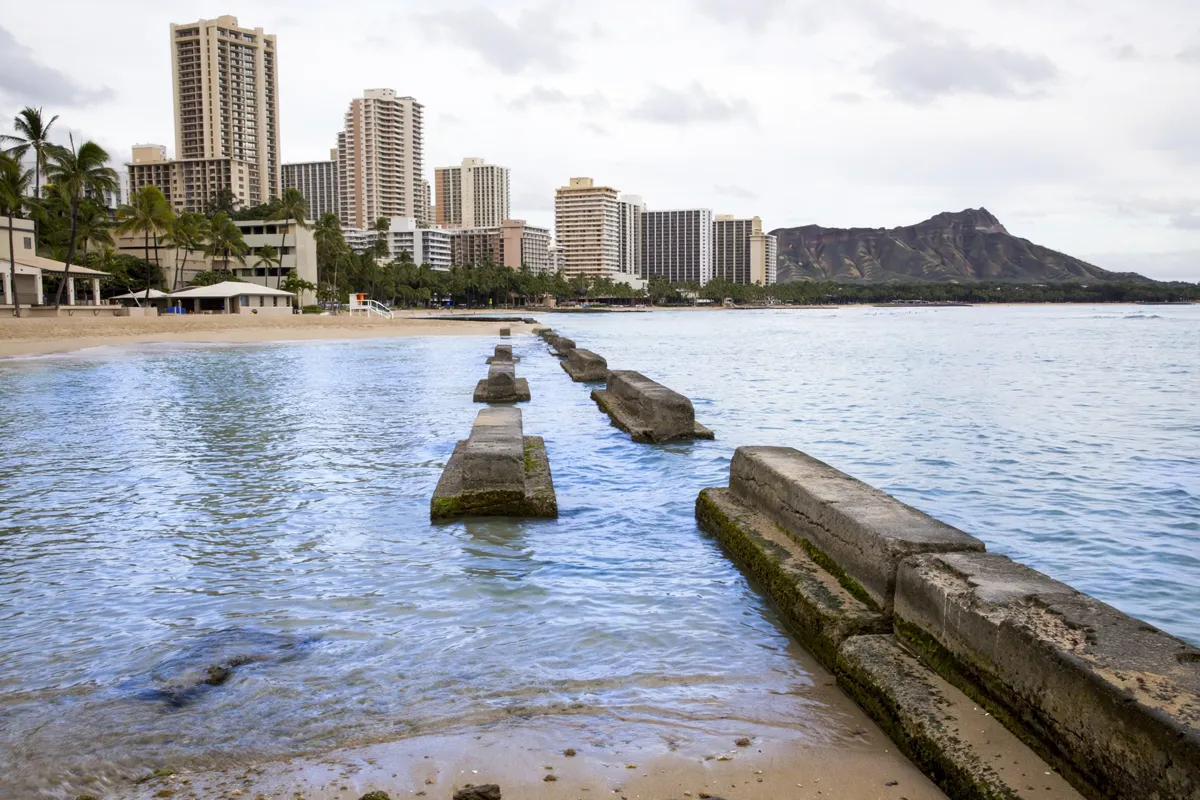
Waikīkī Beach is a connected stretch of shoreline shaped by both natural forces and coastal engineering. The state’s coastal description records construction of the War Memorial Natatorium in 1927, northern Kūhiō Beach with a submerged offshore breakwater in 1939, Duke Kahanamoku Beach and Lagoon in 1956, and Queen’s Surf Beach with sand fill in 1957.
The Hawaiʻi Tourism Authority describes Waikīkī Beach, Duke’s Beach, Kūhiō Beach, and Queen’s Surf Beach as sections of a larger shoreline. Groins, sand fill, and seawalls have substantially shaped this urban coast.
A fringing reef protects the inner reef and shoreline from open-ocean wave energy. The Diamond Head State Monument trail offers another way to take in the coastline at the shoreline’s eastern end.
Wave patterns vary. Refracted easterly trade-wind waves reach the coast year-round; southerly swell is most common in summer, while southerly Kona-storm waves can occur at any time of year and are most common in winter.
Public beach access and facilities
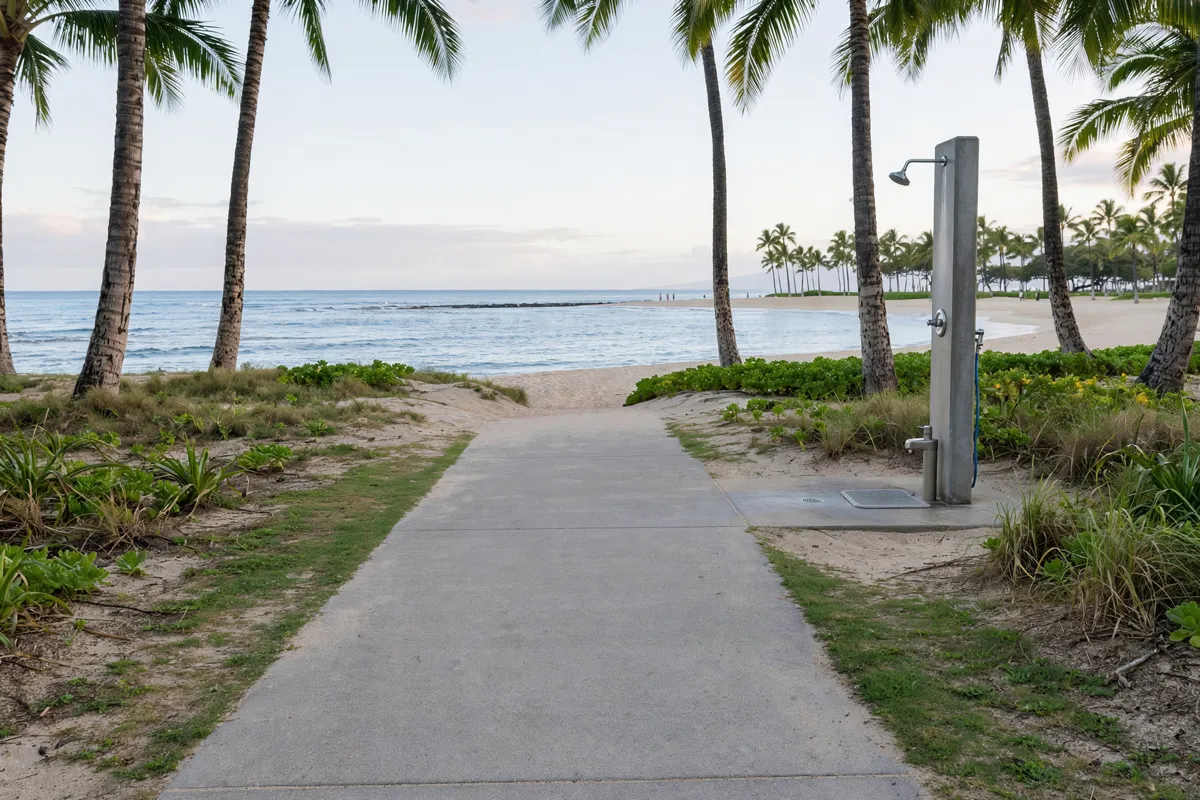
Kūhiō Beach is a practical place to look for public facilities along Waikīkī’s shoreline. The Hawaiʻi Ocean Safety lifeguarded-beaches list identifies Waikīkī–Kūhiō as a lifeguarded beach, with service Monday–Sunday, 8:00 a.m.–6:30 p.m.
Public access conditions can vary along the coast. The state Office of Conservation and Coastal Lands identifies repairing the stairs off the Sheraton walkway as the first priority for restoring safe public access at Gray’s Beach. For current access information, check the official site before you go: Hawaiʻi’s Office of Conservation and Coastal Lands.
Swimming, surf, and ocean-safety checks
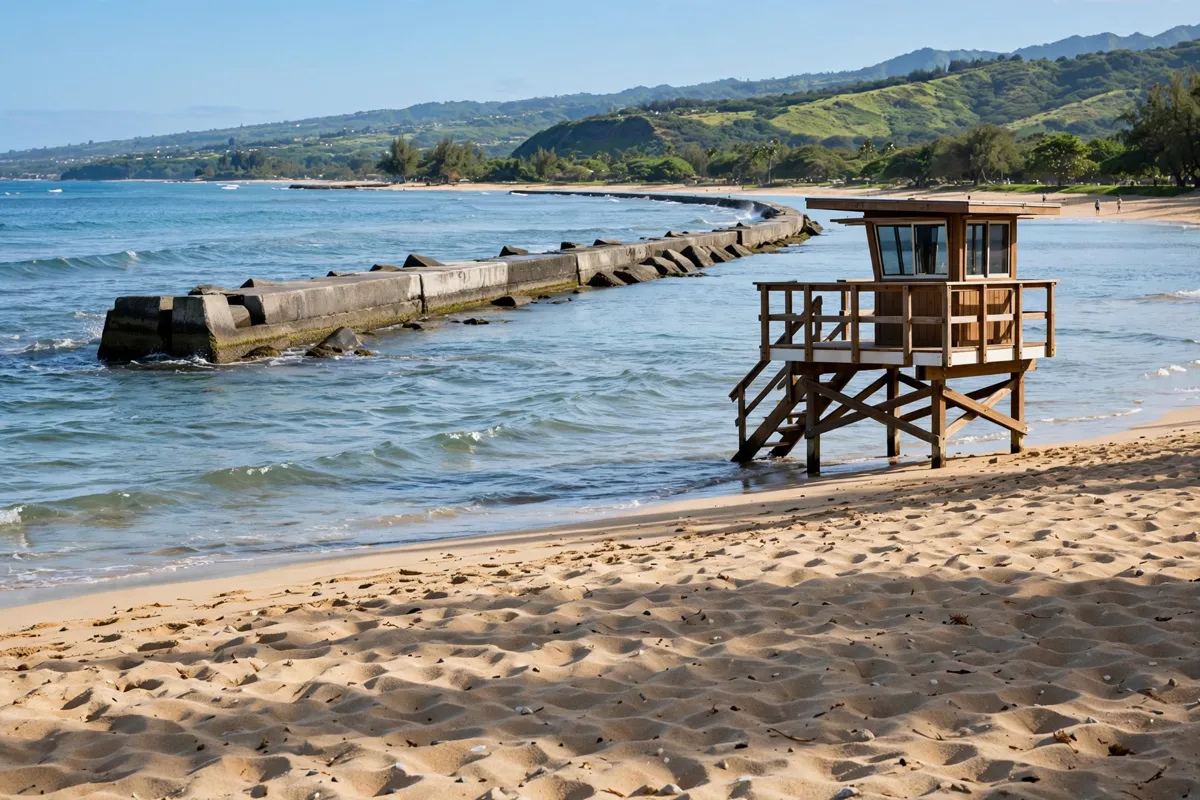
Check the ocean before entering the water, even at a beach with a swimming enclosure. Honolulu Emergency Services advises checking conditions or speaking with a lifeguard because they change constantly; it also recommends swimming at a lifeguarded beach and not swimming alone.
At Kūhiō Beach, two concrete walls extend about 40 yards into the ocean and form an enclosure described as calm. The walls do not remove the need to check conditions. The Hawaiʻi Tourism Authority also warns that the Waikīkī Wall is intended for walking: jumping from it is dangerous for adults and children.
Hawaiʻi Ocean Safety provides beach-hazard and safety guidance. The City says its HNL.info app gives alerts about unusual ocean conditions, lifeguard-tower closures, and other public hazards. Kūhiō Beach is also described as suitable for swimming, snorkeling, bodyboarding, bodysurfing, and surfing; choose an activity only after checking the conditions. The Waikiki Aquarium is another named attraction in the area.
Walks toward Kūhiō and Kaimana beaches
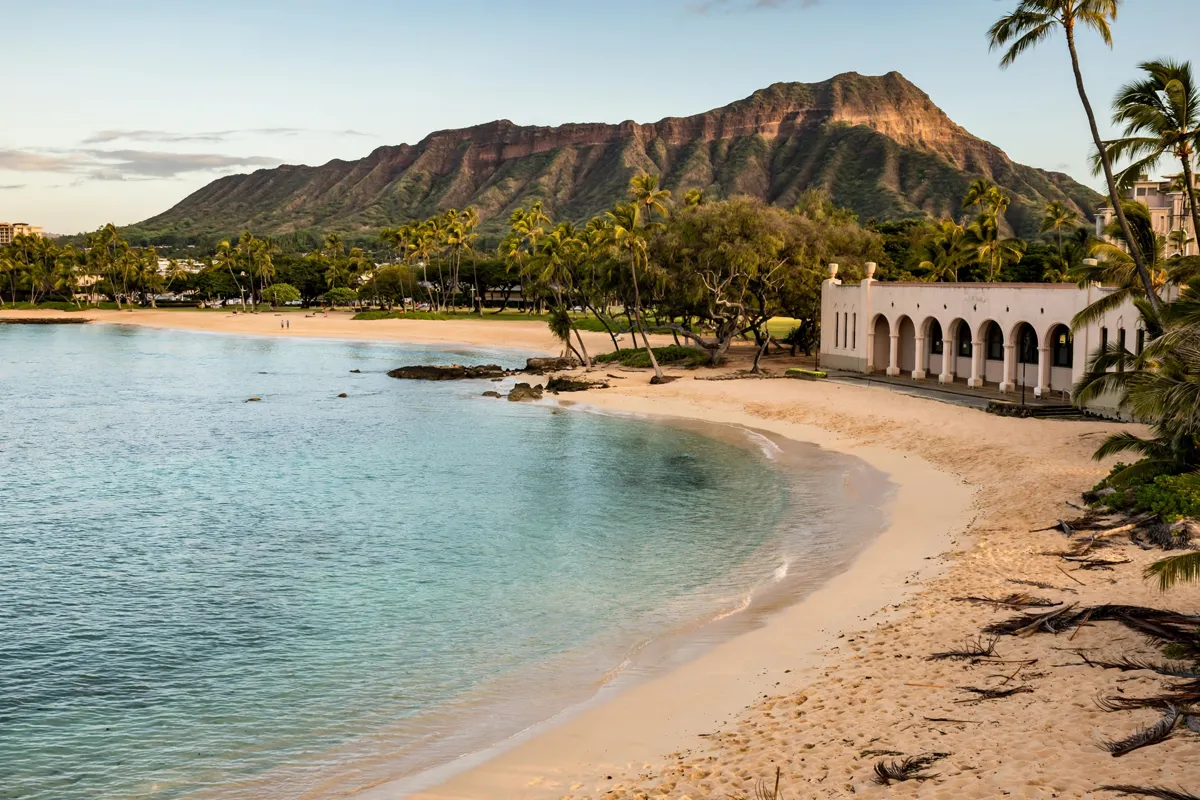
Kūhiō and Kaimana sit within the broader Waikīkī coastal area, where the shoreline runs from Diamond Head toward Ala Wai Boat Harbor.
The state coastal office describes a planned survey of seawalls and other hardened shoreline structures from the harbor to Kaimana, with historical data collection and management-plan options among its aims. Fort De Russy is another Waikīkī landmark along the area’s shoreline; its park and museum guide covers the site.
For a shoreline outing, you can focus on the Kūhiō swimming area or continue your time along the coast toward Kaimana. Keep the ocean conditions in mind as you plan, since wave exposure and beach conditions are not constant across the shoreline.
FAQs
What water activities are suitable at Kūhiō Beach?
The Hawaiʻi Tourism Authority describes Kūhiō Beach as suitable for swimming, snorkeling, bodyboarding, bodysurfing, and surfing. Check ocean conditions before entering the water.
Are the walls at Waikīkī safe to jump from?
No. The Waikīkī Wall is intended for walking, and jumping from it is dangerous for adults and children.
Why does Waikīkī Beach have engineered shoreline features?
Waikīkī’s urban shoreline has been substantially shaped by groins, sand fill, and seawalls. The state’s coastal history also records multiple beach and shoreline construction projects across the twentieth century.